
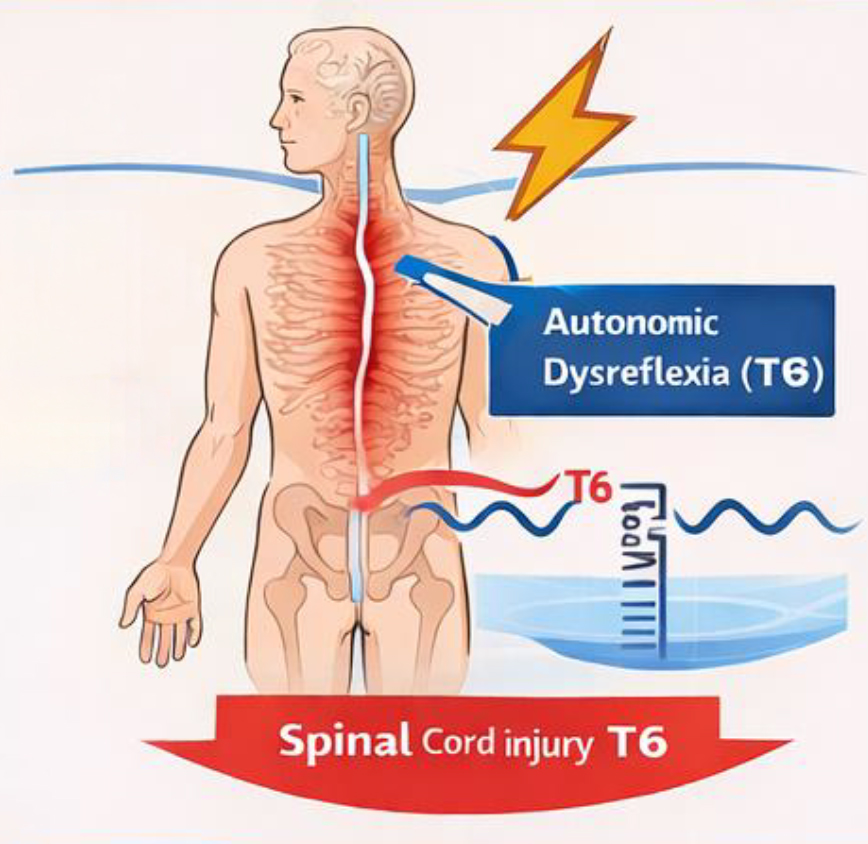
What is Autonomic Dysreflexia?
Autonomic Dysreflexia (AD) is a serious medical emergency that occurs in people with spinal cord injury at or above T6.
It happens when the body has a strong reaction to a stimulus below the level of the injury, causing dangerously high blood pressure. The brain cannot properly regulate it due to the spinal cord injury.
Untreated AD can lead to stroke, seizure, or death.
 Untreated AD can lead to stroke, seizure, or death.
Who Is at Risk?
- Individuals with spinal cord injury T6 or above
- Common in people with:
- Quadriplegia
- Chronic spinal cord injury
- High paraplegia
Signs & Symptoms
(Most Important to Check First)
Bladder Issues (MOST COMMON cause)
- Full bladder
- Kinked or blocked catheter
- Urinary retention
- Catheter not draining
Bowel Issues
- Constipation
- Impacted stool
- Bowel program irritation
Symptoms Below Level of Injury
- Pale, cool skin
- No sweating
- Tightness or discomfort
Vital Signs
- Sudden, dangerous increase in blood pressure
- Slow heart rate (bradycardia) or
- Rapid heart rate
What Caregivers SHOULD DO Immediately
- Sit the person upright (raises head, lowers BP)
- Loosen tight clothing or devices
- Check bladder first:
- Ensure catheter is not kinked
- Ensure urine is draining
What Caregivers SHOULD NOT DO:
- Do NOT lay the person flat
- Do NOT ignore symptoms
- Do NOT wait for symptoms to pass
- Do NOT perform bowel care unless specifically trained and ordered
When to Call 911
Call emergency services immediately if:
- Blood pressure is severe or worsening
- Symptoms do not resolve quickly
- There are vision changes, chest pain, or altered consciousness
Documentation & Reporting
Document:
- Symptoms observed
- Suspected trigger
- Interventions taken
- Who is notified and when
KEY SAFETY REMINDER:
Autonomic Dysreflexia is life-threatening but highly preventable with fast action. Early recognition and immediate response saves lives.
Click here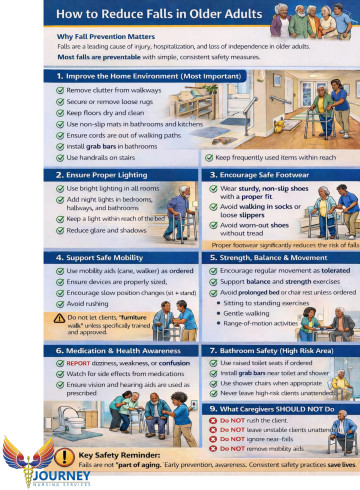 to download our flyer for your immediate use in sharing or posting!
